
I lost 95 pounds on Wegovy. The hardest part was the skin no one warned me about.
Nobody warned me about the aftermath. The 95 pounds came off. The skin didn't.
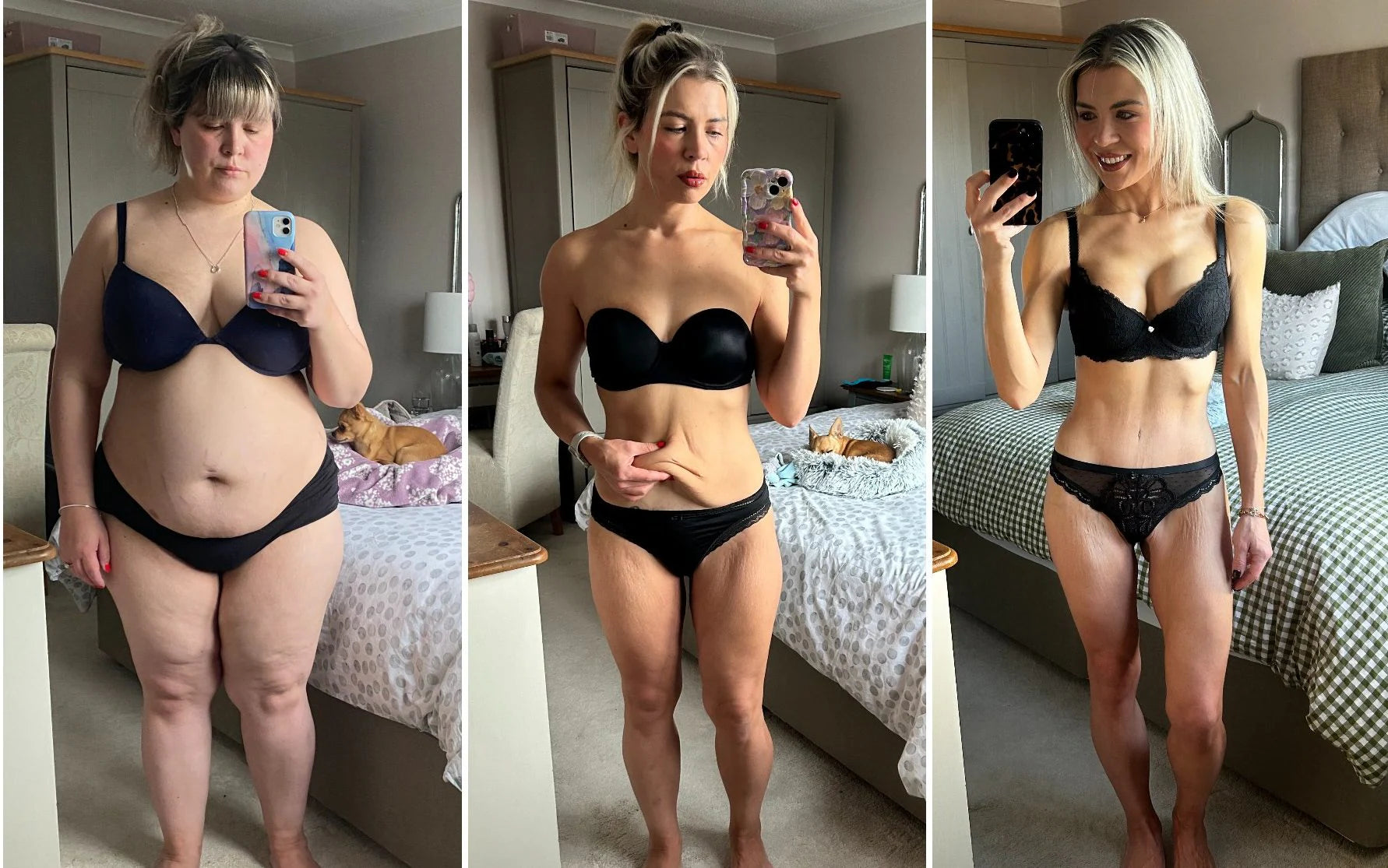
Two years ago I weighed 232 pounds. My A1C had crossed into pre-diabetic, and my endocrinologist started me on Wegovy. Eighteen months later I weighed 137 — ninety-five pounds gone, the number twenty years of diets had sworn was impossible.
My mother cried when she saw me at my niece's wedding. I should have felt finished. I had just done the single hardest thing I had ever done.
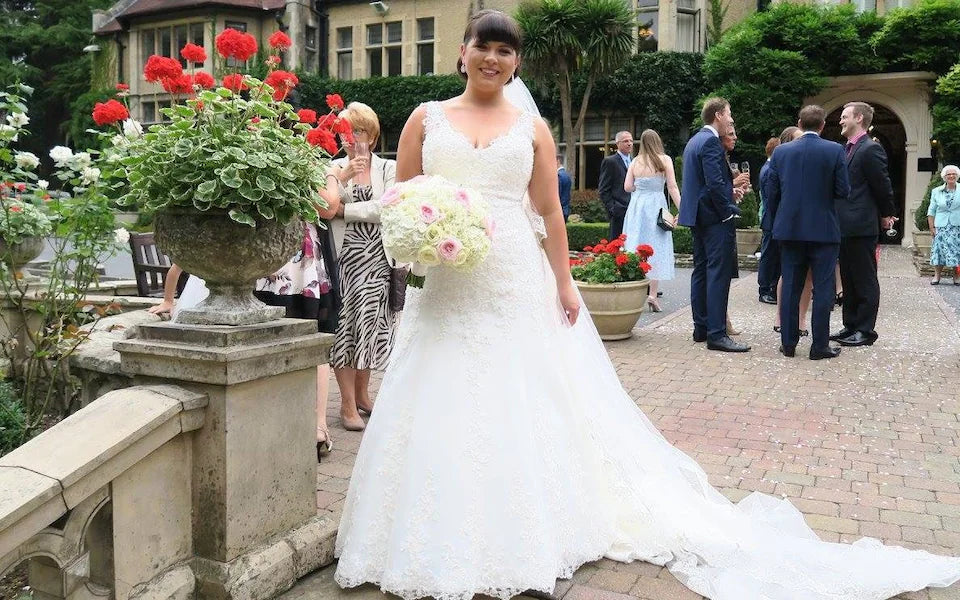
I'd watched it the whole way down. Every size smaller, the skin gave a little more — my belly, the backs of my arms. I knew it was coming. The weight was the fight that mattered; the skin could wait its turn.
That night, its turn came. I stood in the bathroom at 137 and felt worse than I had at 232 — because at 232, the thing I hated still had a finish line. This didn't.
In the wedding photos, I looked finished. Undressed, I wasn't. My belly hung loose. The backs of my arms had gone slack, twenty years older than the rest of me. My doctor had spent eighteen months warning me about my pancreas, my gallbladder, my dose. Not one word about this.
She had not failed me. Loose skin, in the eyes of the medical system, is “cosmetic” — which means it is not medicine's problem. Except it was my problem. And it turned out to be the problem of a lot of women I would later meet.
I'll tell you what I did next, even though I, of all people, should have known better. I bought everything in the drugstore with the word “firming” on it. Bio-Oil. Palmer's. A jar of Maëlys someone swore by. A $110 bottle of StriVectin a saleswoman put in my hand. A Crepe Erase set my mother-in-law gave me, half a gift and half a hint. I used all of it, every day, for a year. The bottles emptied. Nothing changed.
So I priced out the real options. A cosmetic dermatologist quoted me Morpheus8 — eighteen hundred dollars a session, four sessions an area. My stomach alone was six grand; once I added both arms and both thighs it crossed eighteen thousand dollars. A plastic surgeon went higher: a tummy tuck and an arm lift, thirty-eight thousand, plus six weeks of recovery and scars that never fully fade.
I sat in the parking lot afterward and laughed — the bitter kind. I had done the single hardest thing of my life, and the only two options that might fix what it left behind cost more than my car or came with a knife.
And the whole time, I already knew the mechanism that does this. I had spent twelve years around it. I just had not built the version that would let me do it at home, on my own body, without a clinic.
What I knew, and what I had to figure out on my own body
I had spent twelve years in face microneedling — building and selling the devices clinicians use in dermatology and med-spa practices. Face only. Nobody had built the body version.
So I built one myself. This is the first version — what I ran on my own body for fourteen months.

Here is the one idea it took me twelve years to be able to say simply: your body only repairs what it gets a signal about.
Cut your hand and it heals in a week — because the cut sends a signal. The body floods the spot with blood, with collagen, with the repair cells that rebuild tissue. Damage it is told about, it fixes.
Loose skin never sends that signal. It does not happen in a moment — it comes on slowly, over months, as the collagen and elastin that held everything taut wear down a little at a time. No injury. No alarm. So the body is never told anything is wrong, and it never starts the repair. That is why a cream cannot fix this — a cream cannot send a signal that has to come from inside.
Microneedling sends the signal. The stamping makes hundreds of tiny, controlled injuries — shallow, gone in a day — and an injury is an injury: it trips the alarm loose skin never set off on its own. Blood rushes in, the repair cells — the fibroblasts that build collagen and elastin — wake up, and the body finally does to that skin what it does to a cut. The serum, pressed in right behind the needles, is what it rebuilds with: the collagen and peptides your skin grabs while it is finally working.
This is the wound-healing cascade that decades of peer-reviewed clinical literature have documented — the citation list is at the bottom for anyone who wants it. The needle sends the signal; the serum feeds the repair.
What none of that literature had been written for was body application at home. The face devices my industry sold were calibrated for face skin — thinner and more delicate. Body skin is thicker. It needs deeper needles, a larger serum volume per zone, and a different formulation than what face products are built around. I had to figure that part out by running it on myself.
I ran it for fourteen months — once a week, on my arms and belly and thighs.

The first weeks were quiet. By the third, I started noticing something — the skin on my arms felt firmer when I pressed a fingertip into it. By the second month, the firming was harder to miss. When I walked, my stomach didn't move the way it had been moving. By month six, my sides were smooth and my arms were firm.
The body we earn isn't the body we picture.
The skin in the mirror was the obvious result. The less obvious one was bigger — I started getting dressed without flinching at the mirror, wearing things I had bought at 137 pounds and been afraid to put on.
That was the moment this stopped feeling like a personal workaround and started feeling like a question I owed to other women.
Every woman I knew who had gone through the same weight loss journey as I did told me the same thing in private. They had hit the weight. They looked great in clothes. They were healthier than they had been in twenty years. And the skin underneath was undoing all of it — every time they got out of the shower, every time they got undressed in front of someone, every time they were alone with their own body.
I had something that worked on my own body. And the problem those women kept describing to me was the one I had just stopped having. That is not the kind of thing you walk away from.
So I left, and I built it.
It took fourteen more months. I wrote the serum brief myself, on a single rule — every ingredient had to have decades of independent peer-reviewed literature behind it. No fragrance, no alcohol, no acid, no retinol, no essential oils. Nothing that would irritate skin that has just been stamped. The needle depth is calibrated for body skin, which is thicker and less forgiving than face. Each vial is sized for a body treatment, not a small face vial. The whole thing is a single weekly fifteen-minute session.

What I built is not surgery. Surgery removes excess tissue. This rebuilds what is still there — the collagen, the elastin, the dermal layer that lost its hold when the weight came off. It is the clinical mechanism that aestheticians have been delivering for two decades, now sized for body skin and built to do at home in fifteen minutes a week.
What the women who tested it first wrote me
I built this on my own body, but I did not put it on the market without testing it on other bodies first. Before this page went up, a small group of women had been using the device weekly and writing back.

“I stopped Googling 'skin tightening surgery' after week six.”
I'm not exaggerating. I had tabs open. I'd priced out consultations. After everything I did to lose the weight, the loose skin around my stomach felt like the universe's idea of a joke — like, I did the hard part, and this is what I get? I figured I'd try one more thing before booking anything. Six weeks in, I'm standing in front of the mirror and I'm not going to pretend it's gone. But tighter. Smoother. My stomach actually looks like a stomach I can live with instead of something I had to hide.
— Mira L., 38, used Vesper on belly

“The skin I'd given up on came back to life.”
Ok so I lost 87 lbs and the skin on my belly and thighs looked dead. Old. Dry. Wrinkled like it belonged to a woman 30 years older than me. My entire underwear drawer was high-waisted because regular ones would dig in and the belly would roll right over. My daughter got me this for my birthday because she's pushy. I figured I'd use it a few weeks and return it. I don't know how to describe what happened. My skin was looking more alive and was tightening up by each session. It's firmer when I press it. It looks like real skin again — not waxy, not dead. Younger. I'm wearing regular underwear. Nothing rolls. My thighs aren't the same crepey mess they were. I'm not stopping. As long as it keeps doing what it's doing, you can't pry this out of my hands.
— Helene K., 52, used Vesper on belly and thighs

“Looks more like an arm. Less like a hammock.”
73 lbs lost and there's plenty of my body the weight loss didn't fix. But the arms were the part that actually got to me. I had this drape on my upper arms that hung past my elbow when I'd reach forward. Three Florida summers in long sleeves. I held my arms a specific way in photos so the drape wouldn't show. A trainer told me arms were a surgery situation. I'd done the consultation — $17k for the brachioplasty, six weeks of recovery. I figured I'd try this first. Six weeks in and there's still skin there. I want to be clear about that. But it's so much tighter and less crepey. Looks more like an arm and less like a hammock. If it's done this much in six weeks — I cannot wait to see what the next three months brings. I'm not stopping.
— Patricia W., 56, used Vesper on arms

“And then people started asking if I'd lost more weight. I hadn't.”
I've been obsessed with fixing my stomach for years. Honestly? I've tried enough things at this point that I don't really expect anything to work anymore. The scale had stopped moving but my body still didn't look the way I wanted. There was loose skin around my middle that no amount of lifting or dieting was going to fix — I'd kind of accepted that. I picked this up thinking it'd probably be like everything else. Then a few treatments in, I could see the skin actually tightening. And then people started asking if I'd lost more weight. I hadn't. That's when I knew.
— Carla S., 29, used Vesper on belly
These women were part of an early-bird run we did three months ago. You can find more reviews on the page below — most still using it, most six to twelve weeks in. Most of them started seeing it inside that window.
I'll be honest about why I wrote all of this.
I already knew the mechanism that fixes this. What I did not have — what none of us had — was a version built for the body that you could run at home, without a clinic and without a clinic's price. So the drugstore bottles failed, the surgery quotes sat on my counter, and in the end I built the thing I kept wishing already existed.
The least I could do, once it worked, was put everything I learned the slow and expensive way in one place — so you would not have to learn it the same way.
If you're somewhere on that same road — still losing, or done and staring at the same mirror — that is what the next page is. How it works, the research under it, what it costs, and more from the women using it. It isn't the page our ads run to. It's the one I made for the women who'd actually read something like this to the end.
I won't promise you my results — you're not me, and anyone who promises you a body is lying. What I'll tell you is what the women who tried it keep telling me, and what I watched happen on my own skin: you feel it before you see it. The seeing takes weeks. But it comes.
If you're staring down a surgery quote
I know that math because I sat in that chair too — the thirty-eight thousand, the six weeks off, the conversation with my husband about whether it was worth the savings. I went home ready to schedule it. I never went back — not because I lost my nerve, but because I had started seeing enough change on my own skin to want to wait before doing something I could not undo.
Here is the only thing I would ask you to sit with: you can try this for ninety days and decide it was not enough. You cannot un-get a tummy tuck. The scars, the recovery, the cost — those stay. Trying my way first costs you a few months and the price of a kit. Going straight to the knife, if it turns out you did not have to, costs you everything.
The page is here. Go see for yourself.
Show me the studies
Microneedling mechanism — selected peer-reviewed literature.
- Orentreich D.S., Orentreich N. (1995) — foundational mechanical-microneedling description.
- Maia M. et al. (2022) — body-area microneedling, post-weight-loss skin response.
- Girão L. et al. (2024) — serum delivery enhancement through micro-channels.
- Kim H. et al. (2025) — depth-response curves for body application.
- Wang J. et al. (2025) — long-term safety, at-home device use.
Serum actives — representative literature.
- Sodium hyaluronate — topical hydration and skin barrier literature, 1980s onward.
- Hydrolyzed collagen — bioavailability via transdermal channels, 1970s onward.
- Oligopeptide-1 — signaling peptide / fibroblast response literature, 2000s.
- Acetyl hexapeptide-8 — topical firmness studies, 2010s onward.
- Carnosine — antioxidant amino-acid literature, 1990s onward.
- Dipotassium glycyrrhizinate — licorice-derivative anti-irritation literature, 1980s onward.
Full citation list available on request. Vesper is a cosmetic delivery system, not a medical treatment.